
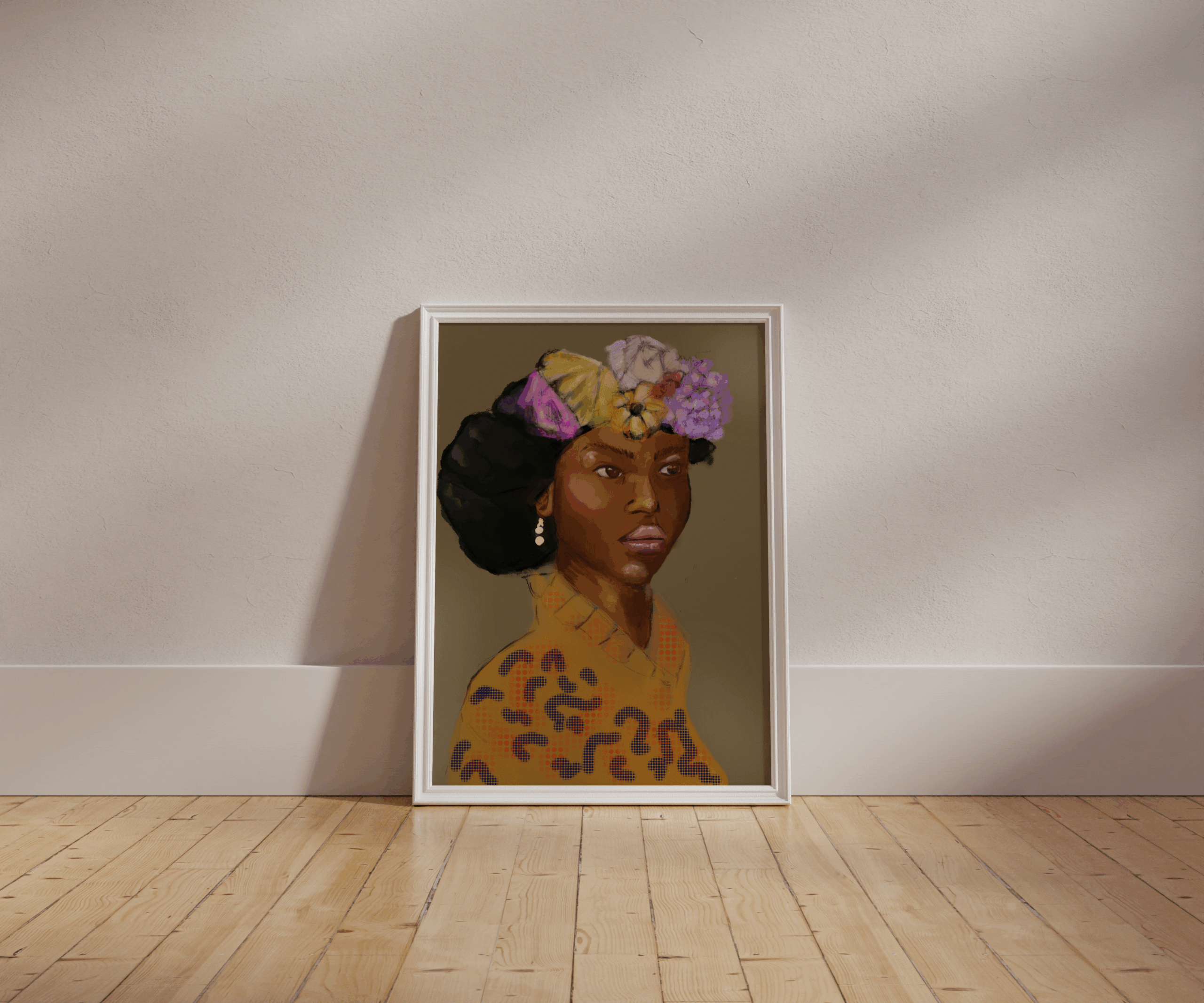
Art Censorship, Amy Sherald, and the White Filter in Contemporary Art
When a Room Starts Editing What It Fears
There is a particular silence that arrives before a work of art is removed.
Not the silence of an empty museum room. Not the silence of people looking closely. It is the silence behind office doors, in emails written with careful language, in meetings where nobody says censorship first, because the word already knows too much.
Someone stands in front of a painting and feels the temperature shift. Someone else worries about donors. Someone else thinks about state funding. Someone else thinks about the headlines before they think about the work. And somewhere in that chain, art stops being treated as a living confrontation and starts being treated as a risk to be managed.
That is the moment that matters.
Not only the wall where the painting was supposed to hang. Not only the institution. Not only the artist. The moment matters because many people recognize it outside of museums as well. The small adjustment of the voice. The softened sentence. The part of the self placed aside so the room stays calm. The instinct to survive by becoming less visible.
Art knows that instinct. Black art knows it. African art knows it. The Afro diaspora knows it. The Afro Caribbean diaspora knows it in the body before language arrives.
Amy Sherald and the Fear Around Representation
The case of Amy Sherald and the painting of the Statue of Liberty as a transgender woman sits inside this larger unease. Reports around the Smithsonian controversy described institutional concern over political backlash and federal pressure during the Trump era, with Sherald rejecting the proposed framing of the work through an added response video and choosing withdrawal instead.¹
That decision carries weight because the issue was not only whether a painting stayed in an exhibition. The issue was whether the work would be allowed to stand in its own voice or whether it had to be filtered before the public encountered it.
A response video sounds soft. It sounds balanced. It sounds like context. Yet context becomes something else when it is placed there to reduce the force of the original statement. It becomes a polite form of control. It tells the viewer what kind of discomfort is acceptable before the viewer has even had the chance to meet the image.
This is where censorship often hides now. Not always in the loud removal. Sometimes in the adjustment. The extra explanation. The softened wall text. The financial hesitation. The institution looking over its shoulder before looking at the art.
And when art by non white, queer, Black, trans, migrant, or otherwise marginalized people receives that treatment, the question becomes larger than one exhibition. It becomes a question of who gets to appear without being pre managed.
The White Filter and the Price of Being Seen
The white filter is not always a person. It is often an infrastructure.
It is the funding model. It is the boardroom. It is the inherited idea of taste. It is the museum voice that treats some histories as universal and other histories as political. It is the difference between being presented as culture and being presented as controversy.
For many artists working from social identity, especially within Afro Caribbean diaspora and contemporary art, the force of the work comes from the right to speak about pain, sorrow, beauty, ugliness, trial, faith, exhaustion, ecopolitical pressure, sociological pressure, social economic pressure, and the mental state of people living inside systems that keep asking them to translate themselves.
That is not decoration. That is not trend. That is not a theme placed onto a canvas to make the room feel current.
It is a mirror.
And mirrors disturb people when they have been trained to see themselves only as innocent.
This is why large paintings by Black women and artists from the Afro diaspora often carry more than scale. They ask for space in rooms where space itself has been historically denied. They do not only ask to be viewed. They ask what kind of room the viewer is willing to become.
When Funding Starts Writing Culture
There is another layer here that does not always look poetic, though it shapes nearly everything. Money.
Who gets funded. Who gets shown. Who gets insured. Who gets collected. Who gets placed into artgalleries, public institutions, private homes, art collection strategies, museum archives, cultural development plans, and long term cultural growth.
The arts have always lived close to power. The National Coalition Against Censorship has documented how political pressure and institutional fear shape decisions around exhibitions, especially where race, gender, sexuality, religion, or state power are involved.² The pattern is familiar. The controversial work is not always banned outright. It is reframed, postponed, relocated, reduced, or surrounded by caution until its pulse weakens.
This is dangerous because culture begins to learn the preferences of power before the public has spoken.
Artists begin asking silent questions. Where does attention go now. What must be hidden to remain alive. What part of the work will cost too much. What part of truth threatens the next grant, the next invitation, the next wall.
That is where survival starts to interfere with expression. Not because artists lose courage, but because institutions often reward obedience and call it professionalism.
Art as a Record of Fear
History has shown this before.
During periods of dictatorship, war, and political tribulation, art has been used both to glorify power and to ridicule it. Some artists were forced into praise. Some chose coded resistance. Some created images that made the grandiose appear absurd. Some documented the terror from inside the machinery itself.
That contradiction matters. Art records both the oppressor and the person trying to breathe beneath oppression.
It records who was placed in the limelight and who was pushed into the margins. It records who performed loyalty to survive. It records who refused. It records the silence around the refusal.
This is why censorship is never only about the present. It edits the future archive. It decides what later generations will believe was visible, possible, acceptable, or absent.
When a work is removed, softened, or surrounded by institutional apology, history does not lose only an object. It loses evidence of the pressure placed upon that object.
The Repercussion Does Not Stay at the Margin
There is a comfortable mistake people make when the censored body is not their own.
They believe the consequence will stay elsewhere.
It never does.
When one group is taught to accept disappearance as normal, society is being trained. When Black art is treated as too political, when African art is only welcomed through a colonial lens, when trans imagery is framed as a threat, when decolonization is reduced to a fashionable word without institutional risk, the damage spreads beyond the people first targeted.
Silence does not protect the room. It prepares the room for the next removal.
That is why this moment around Amy Sherald matters beyond a single painting. It exposes the underlaying infrastructure that determines whether art is allowed to confront the age it lives in. It asks whether contemporary art will remain a place where society sees itself, or whether it will become another polished surface where fear edits the reflection first.
The question is not only what hangs on the wall.
The question is who gets to look at themselves and recognize a life that power did not approve in advance.
And after the room grows quiet again, after the emails are sent, after the wall is patched, after the public moves on to the next outrage, one image remains difficult to erase.
A space reserved for a painting.
A space that still tells the truth.
Want to read more? Subscribe to my social media platform and join to be one of the few to see my exclusive posts on this website.
Sources
¹ Robin Pogrebin, Amy Sherald Cancels Smithsonian Show After Dispute Over Transgender Statue of Liberty Painting, The New York Times, 2025.
² National Coalition Against Censorship, Museum Best Practices for Managing Controversy, publication on institutional response to political pressure and exhibition censorship.

Find me on: Web
